

Introduction
Millions of individuals worldwide suffer from a common condition called snoring. It may appear harmless at first but frequently appears as a mere nighttime nuisance. But loud, frequent snoring can affect millions of people and can impact sleep quality, health, and relationships. The first step towards long-lasting relief is understanding the causes of snoring, whether it’s an occasional snore after a long day or a chronic problem. This blog explains snoring, including its underlying causes, possible health risks, remedies and a number of efficient snoring treatments. We’ll discuss the best approach to stop snoring and enjoy peaceful, undisturbed sleep – from simple home remedies for snoring to advanced solutions like a snore guard, snore mouthpiece, and the innovative Nanosnore.
What is Snoring?
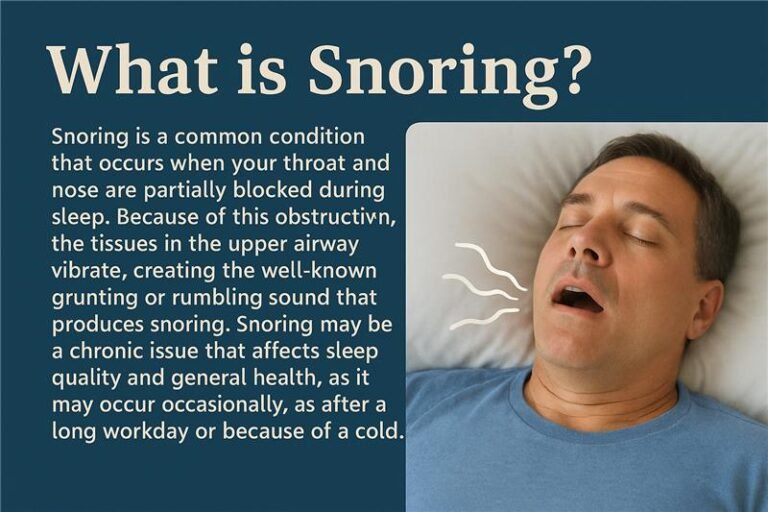
Snoring is a common condition that occurs when your throat and nose are partially blocked during sleep. Because of this obstruction, the tissues in the upper airway vibrate, creating the well-known grunting or rumbling sound that produces snoring. Snoring may be a chronic issue that affects sleep quality and general health, or it may occur occasionally, as after a long workday or because of a cold. If it is loud and frequent, it can also indicate a more serious condition like sleep apnea. While snoring isn’t usually harmful, it can cause sleep disturbances, daily fatigue, and strained relationships. To control or reduce snoring, it’s important to investigate snoring remedies, snoring solutions, and tools like a snoring mouthpiece, snore guard or a new nanosnore.
About half of all adults suffer from snoring at some point, which is a very common sleep-related sound. About 25% of people snore on a regular basis, which is known as habitual snoring. Even though snoring is usually not harmful, it can occasionally be a sign of a more serious illness, such as obstructive sleep apnea. According to the American Academy of Otolaryngology (AAO), snoring is more common in men than in women and gets worse with age.
Causes of Snoring

When the tissues in your airways relax and constrict, it can lead to snoring. This is restricted airflow, which results in a vibrating sound. The level of air restriction in your mouth, throat, or nose can affect the volume of your snore. Allergies and colds can worsen snoring by causing throat swelling and nasal congestion.
For most people, air enters the lungs easily during waking hours because the tissues in the upper airway and throat are open. When you sleep, the tongue and soft tissues relax, resulting in partially blocked airway. Snoring may result from vibration that happens when air enters and exits the airway.
The following are the factors that can lead to snoring:
- Nasal blockage or congestion- Nasal airways can get blocked by allergies, colds, or sinus infections, which makes breathing through the nose difficult and increases the risk of snoring.
- Poor Sleeping Posture: Your tongue slides backward into your throat when you sleep on your back, constricting your airway and causing snoring.
- Alcohol Consumption, smoking and sedatives: These cause the throat muscles to relax, which raises the risk of snoring and airway blockage.
- Excess weight or Obesity: During sleep, airways may narrow and vibrate due to pressure from excess fat around the throat and neck.
- Mouth Anatomy: Overweight people might have narrow airways due to a small chin, short neck, low, thick, soft palate, or extra throat tissues. The triangle tissue that hangs from the back of the soft palate, known as the extended uvula, could block airflow and increase vibration.
- Sleep Deprivation: Lack of sleep can cause the throat to relax more, which can make snoring worse.
- Age and Gender: Due to loss of muscle tone and constricted airways, snoring is more common in men and elderly persons.
- Bulky throat tissue: Overweight people may have bulky throat tissue. Some kids snore because they have large tonsils and adenoids.
- Other factors: Genetic characteristics which affect the mouth and throat’s structure; increased stress levels, in pregnancy time, low concentrations of “good” cholesterol, or high-density lipoprotein; certain medical conditions like or adenoids enlarged tonsils.
All these factors can increase the risk of sleep apnea, high blood pressure and cardiovascular issues. Therefore, identifying the underlying cause of snoring is essential to choose effective snoring remedies or snoring solutions.
Health Risks and Symptoms of Snoring
Snoring may be a sign of obstructive sleep apnea (OSA), a dangerous disorder that causes potential health risks, particularly when it is loud or disturbing. Loud snoring, excessive daytime drowsiness, and occasionally gasping or pausing breathing while you sleep are some of the symptoms. Increased risk of heart disease, hypertension, stroke, and other cardiovascular issues are among the health risks.
An indication of sleep apnea is snoring. This happens when you stop breathing for longer than 10 seconds at a time when you’re sleeping or when you’re breathing drastically slows down. When your airflow falls below 90% of normal, you have sleep apnea. Sleep apnea is a serious medical problem, needs to be treated right away.
Snoring with reduced airflow is a symptom of obstructive sleep apnea (OSA), which is caused by the relaxation of the throat muscles that block the airway as you sleep. A recurrent pattern of breathing disruptions during sleep is caused by OSA. Because of the decreased oxygen levels caused by this condition, the brain sends neural impulses to breathe more forcefully in order to clear the blocked airways. This can therefore result in poor sleep quality and a higher chance of heart disease, stroke, diabetes, high blood pressure, paralysis, and depression, among other health problems.
Snoring is more than just a noisy habit. It may lead to a number of health risks and symptoms. They are,
- Loud snoring, which is a common sign.
- Breathing pauses or gasps during sleep, which leads to sleep apnea
- Daytime sleepiness or fatigue
- Difficulty concentrating or remembering things.
- Morning headaches.
- Other symptoms like irritability, mood swings, and even behavioral changes in children with OSA.
- Sleep deprivation leads to chronic snoring, disrupted sleep, causing fatigue, irritability, and poor concentration.
- Obstructive sleep apnea (OSA)
- Relationship issues.
- Increased risk of heart disease and stroke.
- High blood pressure and Hypertension due to OSA.
- Type 2 diabetes due to OSA.
- Mood disorders like depression and anxiety.
- Reduced cognitive functions like memory and focus.
- Increased risk of accidents.
- Other health problems like obesity, irregular heartbeat, and other health issues.
Consult a sleep medicine specialist if you suffer from the above suspected symptoms and health problems of snoring or if you snore loudly and your sleep is frequently disturbed.

Snoring Remedies and Snoring Solutions
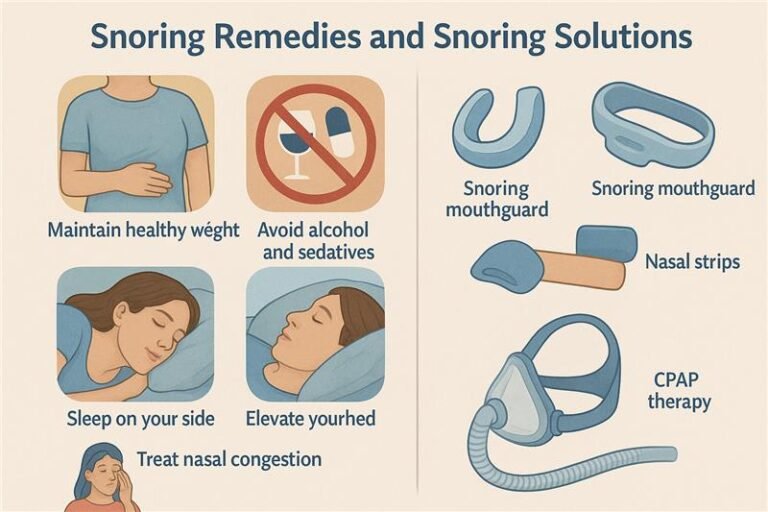
Lifestyle adjustments such as decreasing weight, abstaining from alcohol and sedatives before bed, and sleeping on your side can help minimize or eliminate snoring completely. Additionally, snoring mouthguards, nasal strips, and other equipment can also be helpful to reduce snoring. A doctor may suggest other treatment options, such as CPAP therapy or surgery, if lifestyle modifications prove insufficient. Let’s look at a combination of medical snoring solutions and home remedies for snoring.
1. Lifestyle Changes:
- Maintain healthy weight: Reduce snoring by losing even a small amount of weight since it will reduce the amount of fat in the throat.
- Avoid alcohol and sedatives: To preserve the muscle tone of your throat, avoid consuming these at least two hours before bed.
- Sleep on your side: Instead of resting on your back, try sleeping on your side to avoid the tongue from blocking the throat.
- Elevate your head: Raising the head of your bed can help keep your airway open and reduce snoring.
- Treat nasal congestion: You can try treating the underlying problem, such as allergies or a deviated septum, to reduce snoring caused by nasal congestion. Other useful techniques include raising your head while you sleep, employing nasal strips to enlarge your nasal passageways, OTC medicines or decongestants as prescribed by the doctor and reduce nasal irritation with saline solution.
- Practice good sleep hygiene: Regular sleep schedule, consistent bedtime, and a relaxing bedtime routine can improve overall sleep quality and reduces the muscle relaxation that results in snoring.
2. Home Remedies for Snoring:
- The following are the home remedies for snoring which can be incorporated into your routine to reduce snoring and improve sleep quality.
- To clear nasal passages before your bedtime, inhale steam.
- To reduce throat inflammation, peppermint oil gargle.
- Slightly elevate the head of your bed.
- Use humidifiers to keep the air moist and reduce irritation
- Hydration. Drink plenty of water to stay hydrated and avoid sticky throat tissues.
- Perform regular throat exercises like tongue movements, tongue stretches vowel pronunciation and singing.
- Try to use turmeric, which has anti-inflammatory properties and helps in reducing throat inflammation and snoring.
- Avoid consuming dairy products before bed. Because dairy products may increase mucus production, which leads to nasal congestion and snoring.

3. Snoring Mouthpiece, Snore Mouth Guard, Snore Guard and Nanosnore:
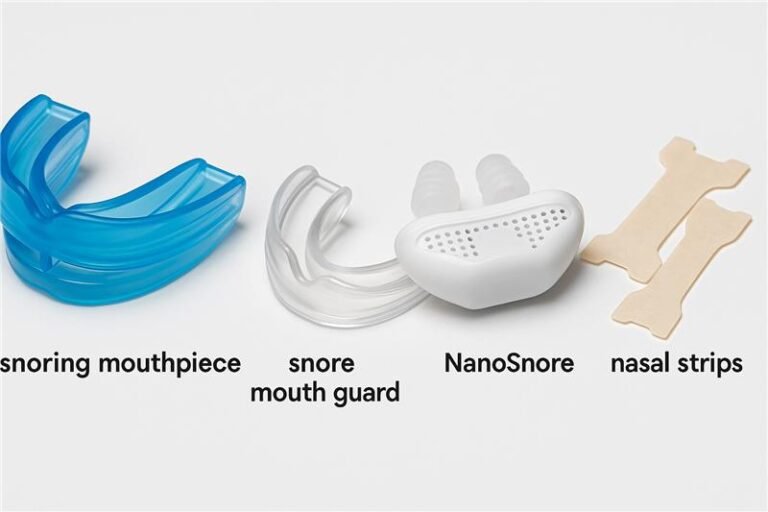
Oral devices designed to reduce or completely stop snoring are referred to as snoring mouthpieces, snore guards, or snore mouth guards. By keeping the airway open during sleep, these devices stop the soft tissues in your throat from vibrating and producing the snoring sound.
- A snoring mouthpiece, also known as a mandibular advancement device or MAD, is a specially designed appliance that fits over the upper and lower teeth and features a mechanism that slowly moves the lower jaw forward. This forward movement helps to prevent the common cause of snoring – the tongue falling back and obstructing the airway.
- Snore mouth guards and Snore guards, also known as oral appliances or anti-snore devices, are used to reduce snoring by keeping the airway open during sleep. They achieve this by gently pushing the lower jaw forward, which prevents the tongue from falling back and airway blocking.
- NanoSnore, a small, user-friendly snoring mouthpiece that fits easily and produces immediate results, is one of the most advanced in this field. NanoSnore provides immediate snore relief, prevents airway collapse, and adjusts jaw position.
- NanoSnore is one of the most revolutionary snoring therapies available. This smart, modest snoring mouthpiece is made to be comfortable and efficient. For people who want to stop snoring without requiring complicated treatments, NanoSnore is a great option because it is discrete and simple to clean, unlike large devices.
- Principal advantages of NanoSnore includes, Travel-friendly and lightweight; Clinically designed for alignment and comfort; Simple to use and maintain; immediate and long-lasting snore relief.
- The use of nasal strips and dilators can improve airflow and possibly lessen congestion and snoring by widening the nasal passages. In general, they are thought to be safe and efficient for enhancing breathing, especially during physical activity or sleeping.
If you’re searching for a reliable and comfortable way to reduce or stop snoring, NanoSnore is worth considering.
Maintaining Oral Health Between Visits
Maintaining your child’s oral health between dental visits is crucial. It involves regular brushing, flossing, and a balanced diet. Encourage your child to brush their teeth twice a day using a fluoride toothpaste and a soft-bristled toothbrush. Flossing should be introduced when two teeth touch each other. As for diet, limit sugary foods and drinks, and provide a balanced diet rich in fruits, vegetables, and dairy products.
FAQs
Children should visit the pediatric dentist every six months for regular check-ups and cleanings. Childrens Dentistry schedules regular appointments to ensure ongoing dental health.
Explain the role of the dentist, use role-playing games, and avoid using words that might cause fear, such as "pain" or "drill." Childrens Dentistry provides a friendly environment to make the first visit as smooth as possible.
Conclusion
Although snoring may seem like a small annoyance, it can have a major effect on your relationships, health, and quality of sleep. The first step in choosing the best snoring remedies is figuring out what causes snoring. Consistency and awareness are crucial, regardless of whether you decide to use a snore guard, home cures, or an advanced snoring mouthpiece like NanoSnore. Consult a sleep medicine specialist if you have suspected symptoms of OSA or if you snore loudly and your sleep is frequently disturbed. Check out the top snoring remedies right now to get restful, undisturbed sleep. Remember, a healthy smile is a priceless gift you can give your child. For more personalized advice and dental care, visit Childrens Dentistry.