
Introduction
As parents, we all want our children to grow up healthy and happy—with a bright, cavity-free smile. But one of the biggest threats to children’s oral health is often hidden in plain sight: sugar.
In this blog, we’ll explore how sugar affects children’s teeth, why it poses a risk to their overall health, and share practical, science-backed tips to help protect your child’s smile—and their wellbeing.
Understanding How Sugar Affects Children’s Teeth
Before diving into prevention tips, it’s essential to understand exactly how sugar affects children’s teeth.
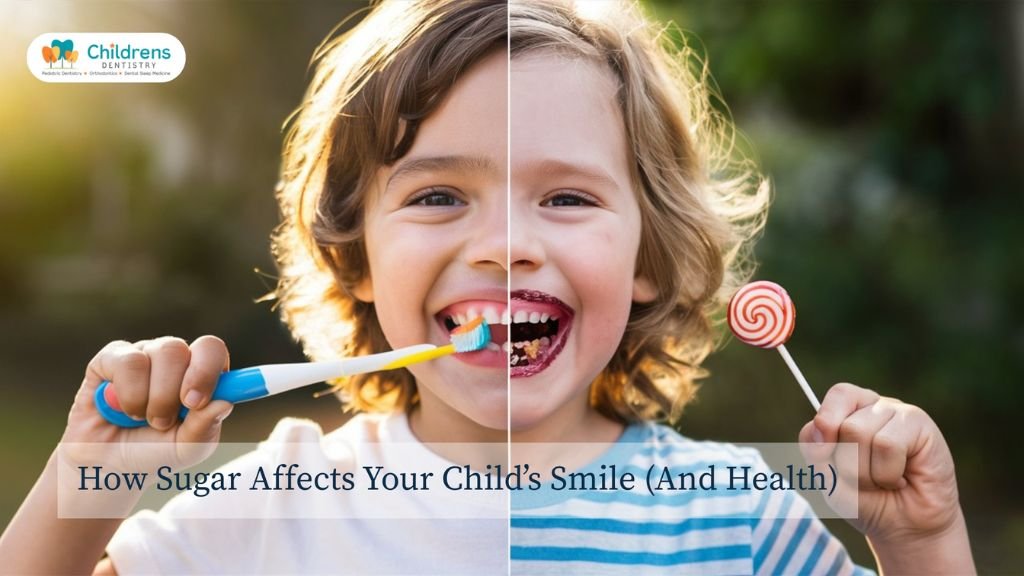
When children eat or drink sugary foods, bacteria in the mouth feed on the sugar and produce acid as a by-product. This acid gradually erodes the tooth enamel, which is the protective outer layer of the teeth. Over time, this process can lead to tooth decay, also known as cavities.
Repeated acid attacks weaken the enamel, making teeth more vulnerable. That’s why experts emphasize the need to limit sugar consumption for children.
📊 Fact: According to the World Health Organization (WHO), reducing free sugar intake to less than 10% (ideally below 5%) of total daily energy can significantly lower the risk of tooth decay in children.
Sugar and Tooth Decay: Why Kids Are More at Risk
Children are especially susceptible to cavities due to:
✅ Developing enamel that is thinner and softer than adult teeth
✅ Difficulty maintaining consistent oral hygiene habits
✅ Frequent snacking and sugary drinks
That’s why how sugar affects children’s teeth is not just about what they eat, but how often they consume sugary foods. Frequent snacking increases acid attacks, leading to more harm.
How Does Sugar Affect Children's Teeth Beyond Cavities?
How sugar affects children’s teeth is not limited to cavities alone. It can also cause:
- Tooth sensitivity
- Gum inflammation
- Bad breath
Moreover, untreated cavities may lead to pain, infection, and even affect speech, nutrition, and school performance.
Sugar and Children’s Teeth: The Bigger Picture of Health
While the link between sugar and tooth decay is well-known, sugar also affects your child’s overall health:
- Weakened immune system: Excessive sugar can lower the body’s ability to fight infections.
- Obesity and metabolic disorders: High sugar intake contributes to weight gain and insulin resistance.
- Mood and behavior: Studies suggest sugar may lead to hyperactivity or mood swings in some children.
Therefore, understanding how sugar affects a child’s health helps parents see the bigger picture.
Top Sources of Sugar in Kids’ Diets
Even parents who avoid candy might miss hidden sugars in:
- Flavored yogurt
- Breakfast cereals
- Fruit juices and soft drinks
- Cookies and packaged snacks
- Sauces and condiments like ketchup
These foods increase the frequency of acid attacks on teeth.
🔍 Tip: Check food labels for hidden sugars under names like sucrose, fructose, glucose syrup, corn syrup, and maltose.

How to Prevent Tooth Decay in Kids
Here are actionable tips every parent should know to protect kids’ dental health:
1. Prioritize Daily Oral Hygiene
- Brush twice a day with fluoride toothpaste
- Teach proper brushing technique (circular motions, gentle pressure)
- Floss daily once teeth touch
2. Limit Sugary Snacks & Drinks
- Reserve sweets for special occasions
- Avoid sticky candies that cling to teeth
- Replace sugary drinks with water or milk
3. Choose the Best Diet for Kids’ Teeth
- Encourage fresh fruits, vegetables, whole grains, and dairy
- Include teeth-friendly snacks like cheese, nuts, and crunchy veggies
- Limit processed foods high in hidden sugars
4. Watch Snacking Frequency
- Give the mouth time to recover between meals
- Offer water after snacks to help wash away sugars
5. Visit the Dentist Regularly
- Schedule check-ups every 6 months
- Professional fluoride treatments may help strengthen enamel
Sugar Intake and Oral Health: What Do Studies Say?
Multiple studies reinforce how sugar affects children’s teeth:
- Children who consume sugary drinks daily have twice the risk of cavities compared to those who rarely consume them.
- Countries that reduced sugar consumption saw significant declines in children’s tooth decay rates.
This evidence shows that reducing sugar isn’t just about diet; it’s a direct strategy to improve children’s dental health.
Myth vs. Fact: Sugar and Kids' Teeth
❌ Myth: Only candy causes cavities.
✅ Fact: All forms of sugar, including fruit juices and refined carbs, can lead to tooth decay.
❌ Myth: Baby teeth don’t matter—they fall out anyway.
✅ Fact: Cavities in baby teeth can cause pain, infections, and affect permanent teeth development.
❌ Myth: Brushing after sugary snacks makes it harmless.
✅ Fact: Brushing helps, but frequency and total sugar intake still matter.
Also Read: 10 Proven Ways to Stop Your Child from Snoring at Night
Children’s Dental Health Tips for Parents
- Start brushing when the first tooth appears.
- Avoid dipping pacifiers in honey or sugar.
- Encourage drinking water after meals.
- Educate kids on the effects of sugar on teeth.
- Be a role model by choosing healthy snacks yourself.
How Sugar Affects Children’s Teeth and Immune System
Excessive sugar can also impair your child’s immune response, making them more prone to infections—including gum disease. So, protecting teeth also means supporting overall health.
Quick Recap: Why Parents Should Care
- How sugar affects children’s teeth: Leads to acid attacks, enamel erosion, and cavities.
- Sugar and child health: Contributes to obesity, weakened immunity, and mood issues.
- Prevention: Better diet choices, daily hygiene, regular dental visits.
Final Thoughts: Building Lifelong Healthy Habits
Understanding how sugar affects children’s teeth empowers parents to make informed choices. Small changes today—like swapping sugary drinks for water and teaching good brushing habits—can have a lasting impact on your child’s smile and overall health.
Let’s work together to build a future where every child grows up with strong, healthy teeth and a confident smile! 🦷✨
Ready to Learn More?
Visit CHILD DENT for expert dental tips, resources, and services to keep your child’s teeth healthy for life.